EV and PHEV Rules in Japan: What Every Driver Needs to Know
· GaimenGo Team
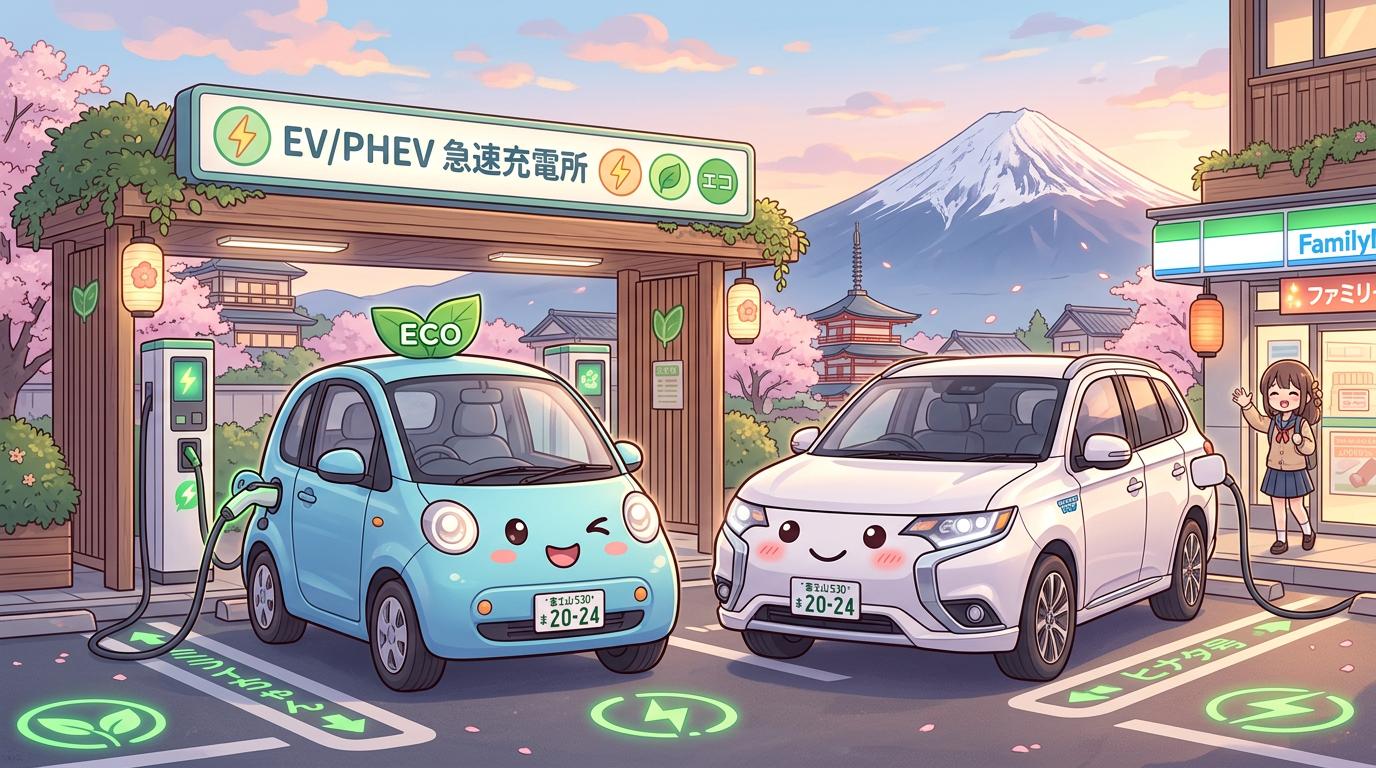
From mandatory pedestrian warning sounds to e-scooter licenses — Japan's EV-related traffic rules are expanding fast. Here's what's now law.
Japan Is Going Electric — And the Laws Are Catching Up
As EVs and PHEVs become more common on Japanese roads, new regulations have been introduced to ensure safety for all road users. Whether you drive an EV, ride an electric scooter, or simply share the road with them, these rules directly affect you.
1. The Mandatory Pedestrian Warning Sound Device
Since March 2018 (new models) and October 2020 (all production vehicles), every EV, HV, PHEV, and fuel cell vehicle sold in Japan must be equipped with a 車両接近通報装置 (Sharyo Sekkin Tsūhō Sōchi — Vehicle Approach Warning Device).
This device emits an artificial sound when the vehicle moves in electric-motor mode — because at low speeds, electric vehicles are nearly silent and pose a serious danger to visually impaired pedestrians and cyclists.
Critically: the driver cannot turn this device off. Disabling it is illegal under the 道路運送車両の保安基準 (Dōro Unsō Sharyo no Hoan Kijun — Road Transport Vehicle Safety Standards).
2. EV Charging Bay Rules
With public charging infrastructure growing across Japan — especially at highway サービスエリア (Sābisu Eria — Service Areas) and パーキングエリア (Pākingu Eria — Parking Areas) — specific rules apply:
- Gasoline/diesel vehicles may NOT park in EV charging bays — even if no EVs are waiting. This is treated as a 駐車違反 (Chūsha Ihan — Parking Violation).
- EV drivers must vacate the charging bay promptly after charging is complete. Staying parked after charging ends is considered 不正使用 (Fusei Shiyō — Improper Use) of the space and may incur additional charges.
- The space is for active charging only — not general parking.
3. JAF Roadside Assistance for EVs
If your EV battery runs completely flat, JAF (日本自動車連盟 — Nihon Jidōsha Renmei — Japan Automobile Federation) will provide a 緊急充電 (Kinkyū Jūden — Emergency Charge) — just enough to reach the nearest charging station. They cannot fully recharge your battery on the roadside. Plan your routes with charging stops in mind.
4. Electric Kick Scooters: The 2022 Law Change
The 2022 amendment to the Road Traffic Act (道路交通法改正 — Dōro Kōtsū Hō Kaisei), effective July 2023, created a new vehicle category:
特定小型原動機付自転車 (Tokutei Kogata Gendōki-tsuki Jitensha — Specified Small Motorized Bicycle)
This covers electric kick scooters with a maximum speed of 20 km/h or less. Key rules:
| Rule | Detail |
|---|---|
| Driver's license | Not required |
| Minimum age | 16 years old |
| Helmet | Recommended, not compulsory |
| Sidewalk use | Only when speed is set to ≤6 km/h with front/rear green flashing lights |
| Road/bike lane use | Required at speeds above 6 km/h |
Scooters faster than 20 km/h remain classified as mopeds (原動機付自転車 — Gendōki-tsuki Jitensha) and require a driver's license.
Key Exam Questions
- 'EV pedestrian warning devices can be turned off by the driver' → False
- 'A PHEV in electric-only mode does not need to emit a warning sound' → False
- 'A gasoline car may park in an EV charging bay if no EVs are waiting' → False
- 'Electric kick scooters under 20 km/h require no driver's license' → True
- 'E-scooters may ride on the sidewalk at any speed' → False (only ≤6 km/h with flashing green lights)
Reference: 道路運送車両の保安基準 (Dōro Unsō Sharyo no Hoan Kijun), 道路交通法改正 2022 (Dōro Kōtsū Hō Kaisei — Road Traffic Act Amendment 2022), NPA (警察庁 — Keisatsu-chō — National Police Agency), JAF EV Guidelines.